Understand How the New Generation of Profilers Redefines the Balance Between Range, Resolution, and Power Consumption.
The launch of the Teledyne Workhorse Proteus marks an important shift in the market for Acoustic Doppler Current Profilers (ADCPs). While the Proteus inherits the proven foundation of the Workhorse line, what truly sets it apart is its ability to expand the trade-off space — the inevitable technical balance between range, resolution, velocity variance, and power consumption.
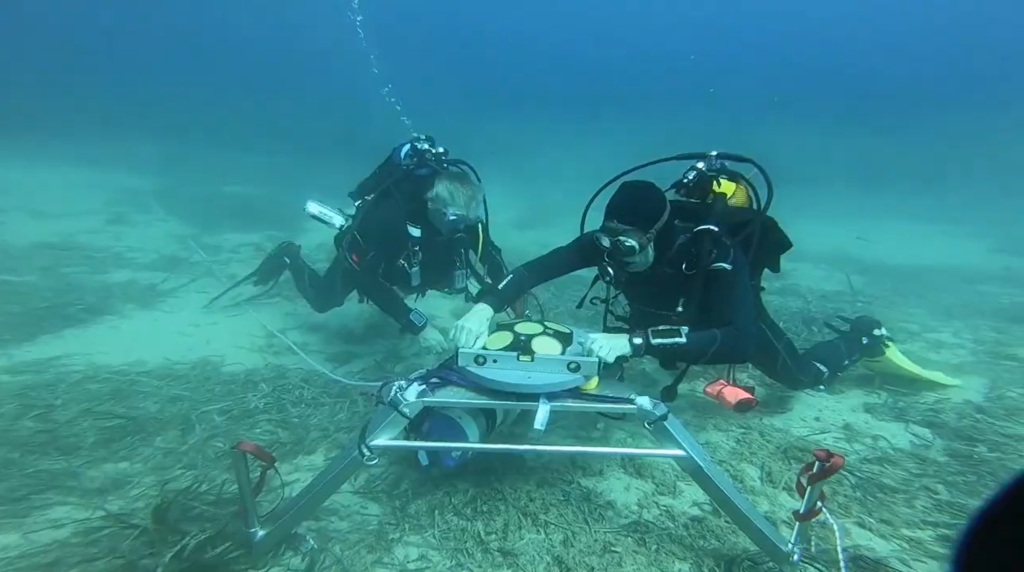
To understand its impact, it is first necessary to understand the main limitation of any ADCP:
The Trade-Offs of ADCP Technology
ADCPs operate by transmitting acoustic pulses into the water. Due to the fundamental physics of sonar, there is an unavoidable technical balance:
1. Short Pulses → High Resolution, Short Range, Higher Variance
- They enable fine and detailed vertical bins.
- They provide greater spatial granularity.
- However, they significantly reduce the maximum measurement range.
- They also increase velocity variance, reducing measurement precision.
2. Long Pulses → Greater Range, Lower Variance, Lower Resolution
- They extend the usable measurement range.
- They reduce velocity variance (increasing measurement precision).
- They sacrifice resolution, resulting in larger vertical bins with greater range.
- It is possible to reduce variance through extended temporal averaging; however, this comes at the cost of reduced temporal resolution — a critical limitation for dynamic applications.
In summary, every ADCP operator must face these trade-offs:
RANGE ↔ SPATIAL RESOLUTION ↔ ACCURACY ↔ POWER CONSUMPTION
How the Workhorse Proteus Expands the “Trade-Off Space”:
The Proteus was designed to break traditional limitations through a modern electronic and computational architecture, delivering unprecedented configurability and flexibility in its class.
Below, we outline the key features and how each one directly acts to mitigate classic trade-offs.
1. Advanced Digital Signal Processing (ADSP) Platform + Catalyst Processor
What it addresses:
Limitations between spatial resolution, range, and velocity variance.

How:
Doppler processing is performed on a dedicated MCU, while a separate MCU—called Catalyst—is used for post-processing, enabling ping rates above 16 Hz.
It allows advanced pinging schemes, including simultaneous operation and multiple temporal and spatial scales.
It processes more data onboard and converts it into practical, actionable insights.
It integrates easily with any electronic platform and ensures reliable data logging.
2.Configurable Transmit Power
The inability to dynamically prioritize either range or resolution.
How:
The user can adjust the transmit power to:
- increase the maximum range,
- while simultaneously maintaining spatial resolution, tailoring the instrument to the mission—whether coastal, offshore, deep-water, stationary, or vessel-mounted.
3. Five-Beam System with Dedicated Vertical Beam
What it addresses:
The historical limitation of ADCPs that estimate vertical velocity only through indirect calculations from slanted beams.
How:
With a high-resolution vertical beam, the Proteus:
- measures true vertical velocity,
- significantly improves profile quality,
- reduces errors and uncertainties,
- enables new research applications, especially for water-column processes and vertical fluxes.
4. Low Power Consumption (< 7 W)
What it addresses:
The tension between advanced performance and autonomy in long-duration missions.
How:
Despite offering sophisticated capabilities, the Proteus operates at less than 7 W, enabling:
- longer deployments,
- easier integration into autonomous platforms (AUVs, USVs, gliders),
- improved overall mission efficiency.
5. New High-Performance AHRS
What it addresses:
Orientation errors, especially on mobile platforms.
How:
The new AHRS ensures:
- more accurate pitch, roll, and heading compensation,
- reduced velocity errors,
- higher fidelity in challenging environments,
- greater reliability for dynamic missions.
The Result: A “Flexibly Tuned” ADCP, Not a Limiting One
The Proteus’ true differentiation lies not in overcoming the laws of physics—no ADCP can—but in allowing operators to dynamically reconfigure the balance between range, resolution, and power.
Instead of being locked into a single trade-off point, users gain access to an expanded trade-off space, where they can:
- select the ideal range,
- choose the desired level of resolution,
- minimize velocity variance without sacrificing resolution,
- adjust power according to mission objectives,
- operate simultaneously across multiple spatial and temporal scales.
The Proteus offers exceptional versatility for estuarine, coastal, and open-ocean environments, delivering high precision for research projects, environmental monitoring, and coastal engineering applications.
Atlantec, in partnership with Teledyne Marine, brings the new Proteus ADCP to the Brazilian market. Regardless of the deployment mode, you benefit from Atlantec’s commitment to specialized technical support, trusted consulting, and services through an exclusive post-sales program that protects your investment—providing preventive maintenance and accredited calibration* at no cost during the first 24 months after purchase.
Our team of specialists is ready to support you at every stage, ensuring the selection of the most suitable equipment for your project.